Nobody photographs the epoxy campaign. Hundreds of parts, two coats each, and a timing window you have to judge by eye and nerve.
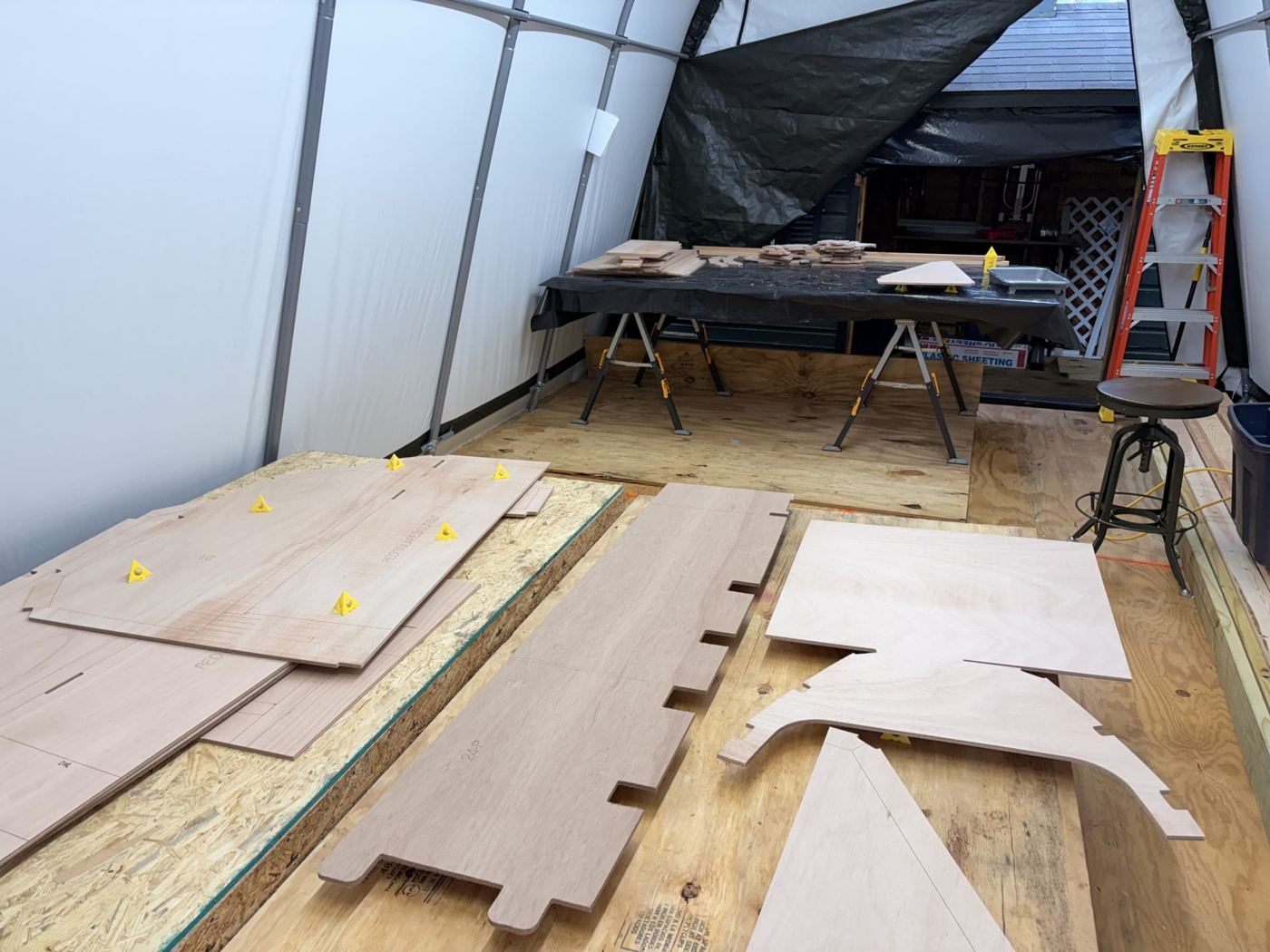
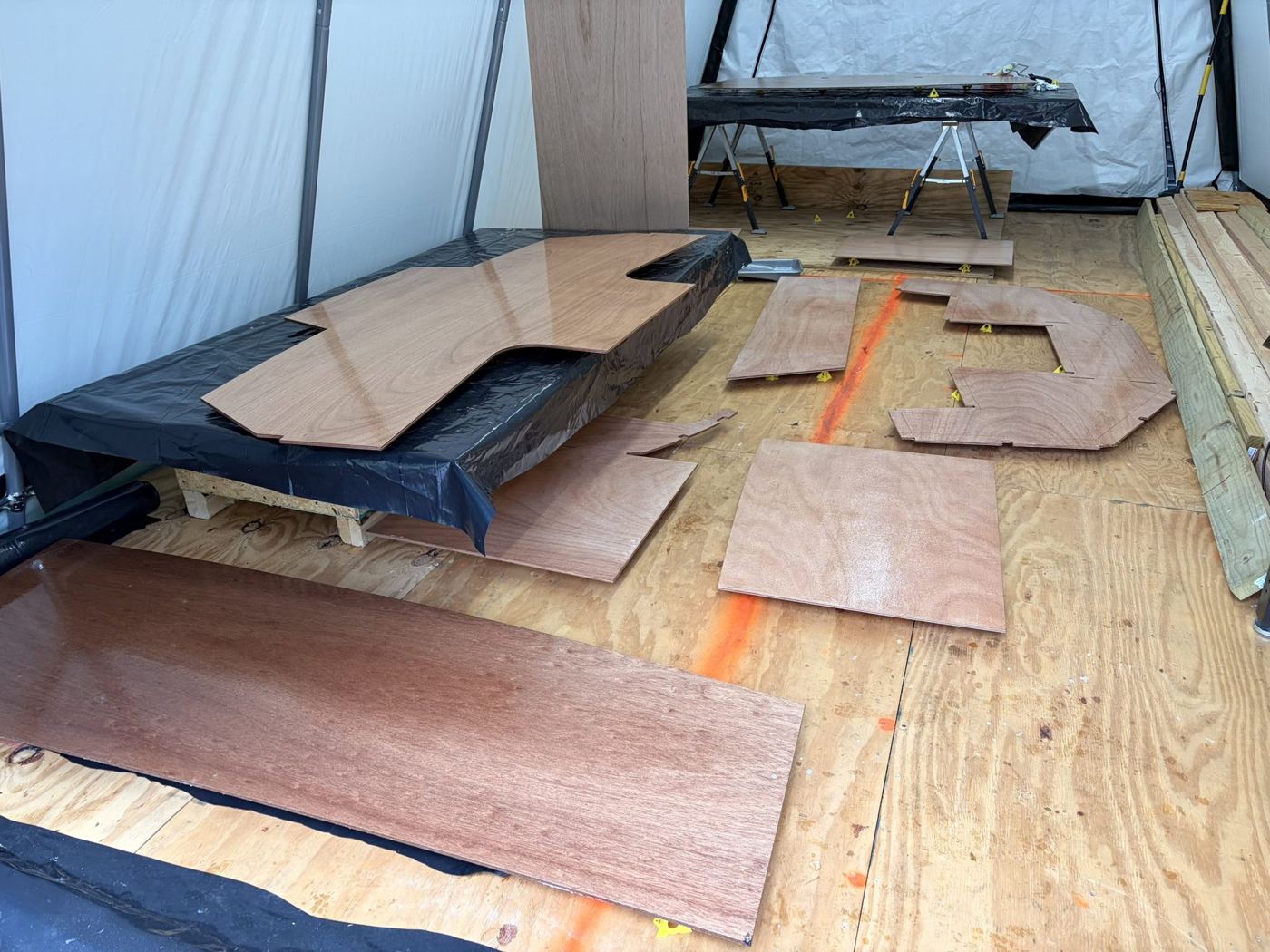
If the platform was the least photogenic milestone, this phase is the least photogenic month. The bench-sealing campaign: every plywood and timber piece in the boat gets epoxy-coated before assembly, while it's still flat on a bench instead of overhead in a finished hull. This was a deliberate choice to make sure the plywood is well sealed before the framing goes up. It is unglamorous. It is time-consuming. And it's the phase where the build is mostly invisible: the boat doesn't look any more like a boat this week than last week. It's just sealed better.
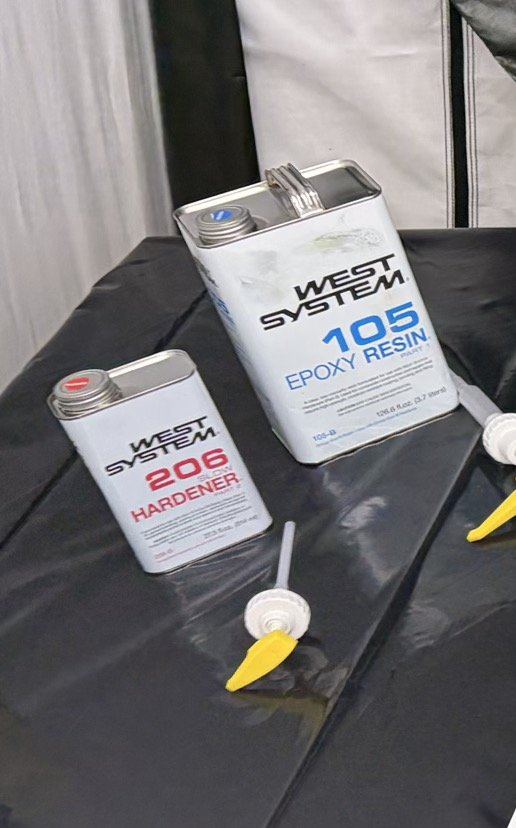
The routine was set by the heat. Epoxy cures by making its own heat, and in a shelter already running past 40 °C that reaction races, so every batch was mixed small: West System marine epoxy with the slow hardener, just enough for one session. The second rule was timing. Coats only went on as the temperature was dropping, never while it was climbing, because warming wood breathes air out through a fresh coat and leaves it full of bubbles. That meant the first coat in the late afternoon and the second late in the evening. Each batch went straight from the mixing pot into a paint tray, where it spreads thin and stays cool, and onto the parts with a foam roller. Leave it sitting in the pot and it heats itself until it smokes, which happened on more than one occasion, to my chagrin and my wallet's.
The green window
The tricky part is that I'm applying the second coat while the first is still "green": cured enough to touch, not cured enough to be finished. Get the second coat on inside that window and it bonds chemically to the first, one continuous film, no sanding between coats. Miss the window and the first coat has to be scuffed dull and washed before the second can go on, adding more hours to a phase that already eats them.
But "green" isn't a number on a clock. It moves with the temperature, the humidity, the batch, and the hour of the day the first coat went on. So every second coat is a judgment call: you press a thumb to a test spot, read the tack, and commit. Then you hope you read it right, because there's no undo.
In practice, the window in the shelter ran anywhere from an hour and a half to three hours, depending on how hot the day had been. The test was simple: a fingertip pressed on a test spot, starting with the first part coated in each round, since that one would be the first to go off. If it took a fingerprint without lifting epoxy onto my finger, the second coat went on. Not one coat missed the window, which I'll put down to small batches and watching the clock more closely than I'd like to admit.
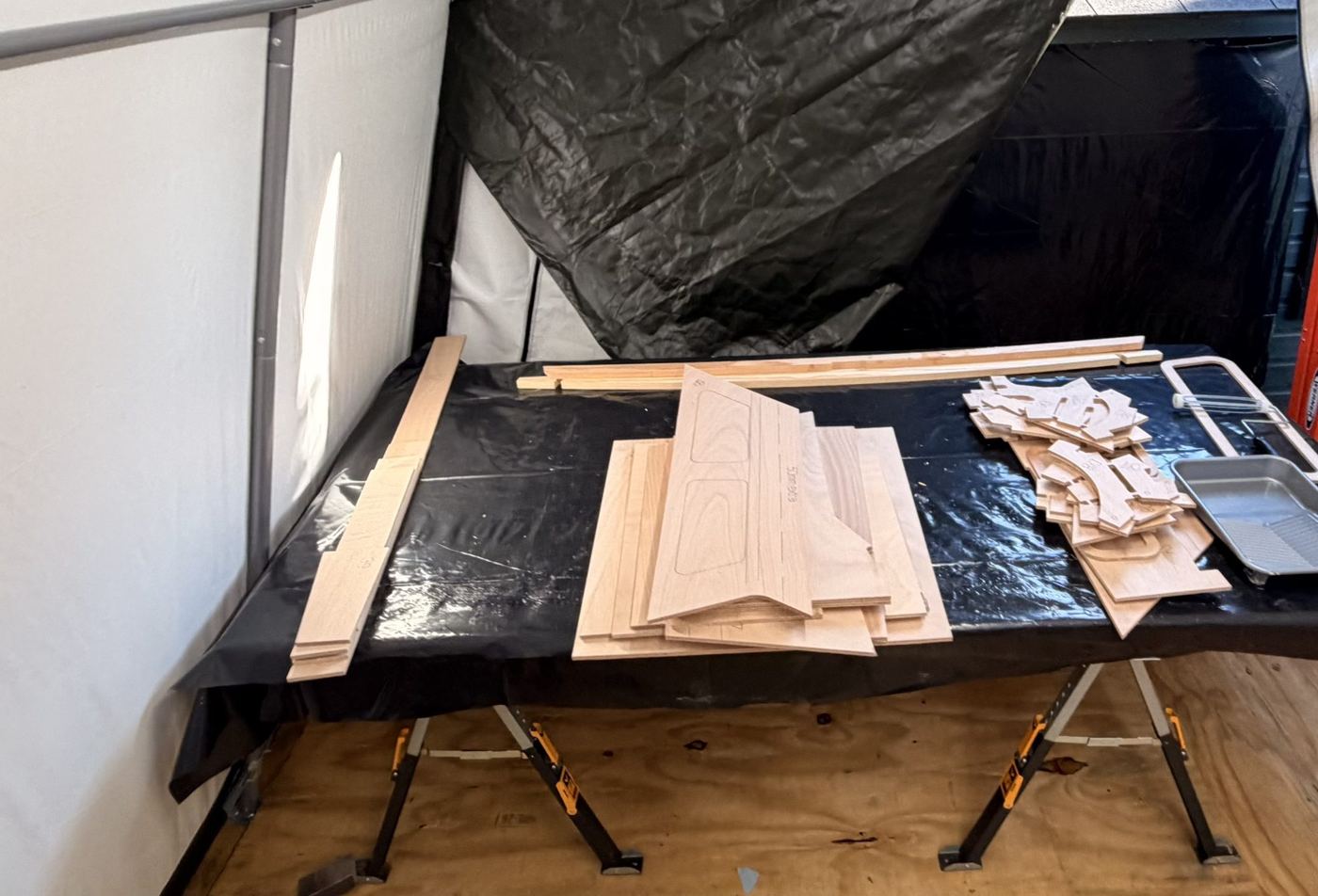
As of now, every part on the coating schedule has its coats. Two groups were held back on purpose: the parts that would only be coated on one side, because sealing one face and not the other invites plywood to warp, and the gussets, left bare so the glue gets a better bite when they go on.
The lessons so far: it takes twice as long as I thought it would, and there is nothing glamorous about any of it. I hope coating everything first turns out to be the right call. Other builders have gone the same way, which helps, but I won't really know until the parts start going together.
Next up: the frames.