A crate of CNC-cut plywood lands in the driveway, gets counted twice, and the first epoxy goes on.
The crates are here. Somewhere in that stack of 9mm plywood is a boat that's going to cross the Atlantic. Right now, it looks more like flat-pack furniture with no instruction manual.
Slow is fast
Before anything moved into the shelter, everything got photographed exactly as it arrived: crate condition, strapping, every layer as it came off the stack. Then the slow part: an inventory of every part against the order lines and the plan sheets.
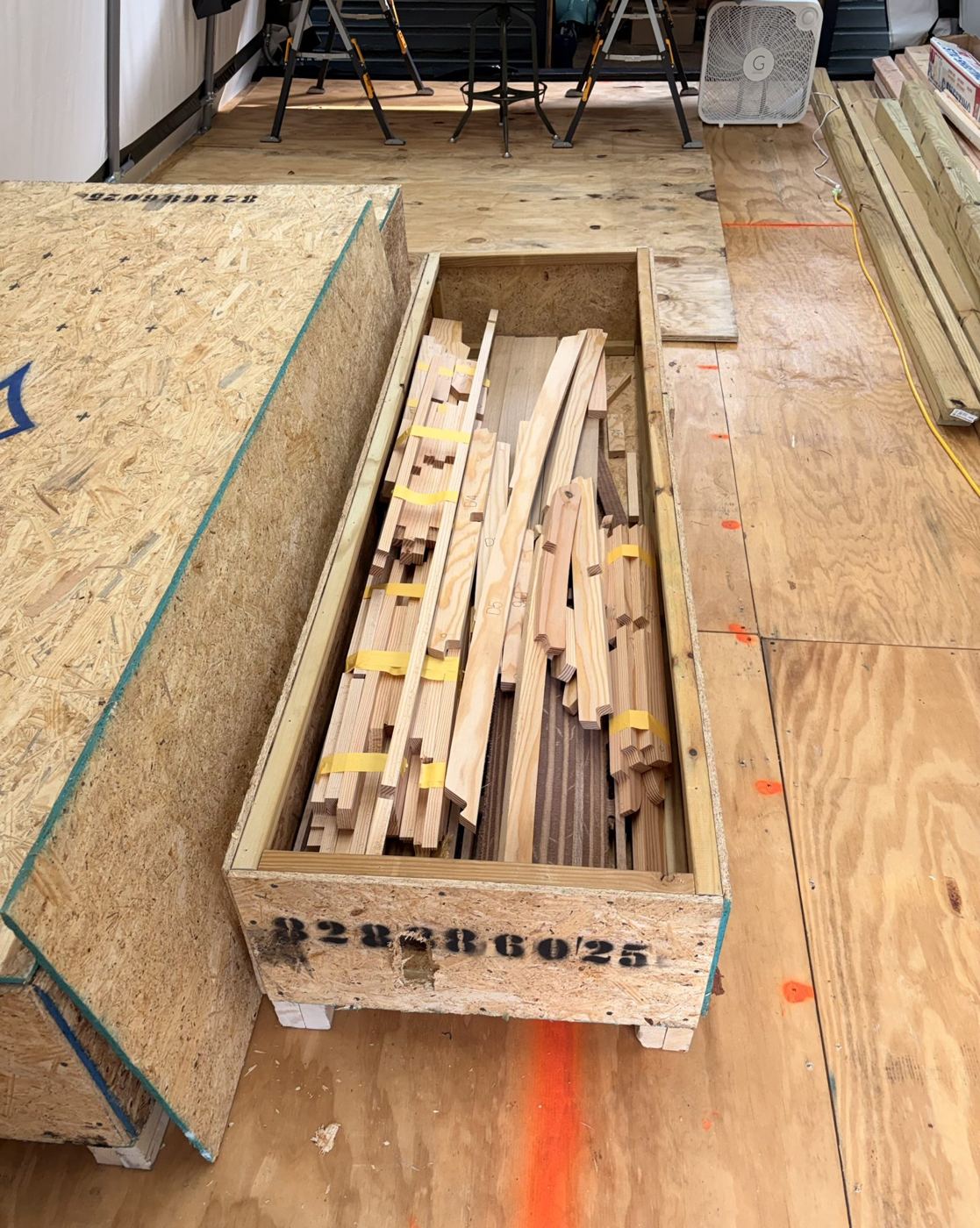
A lesson for other builders: there is no detailed packing list for this kit. The plans themselves are the inventory. You work sheet by sheet, ticking off parts as you identify them. It takes an evening, and it's worth every minute, because the time to discover a missing or damaged part is now, not the weekend you need it.
Two more receipt notes for future builders:
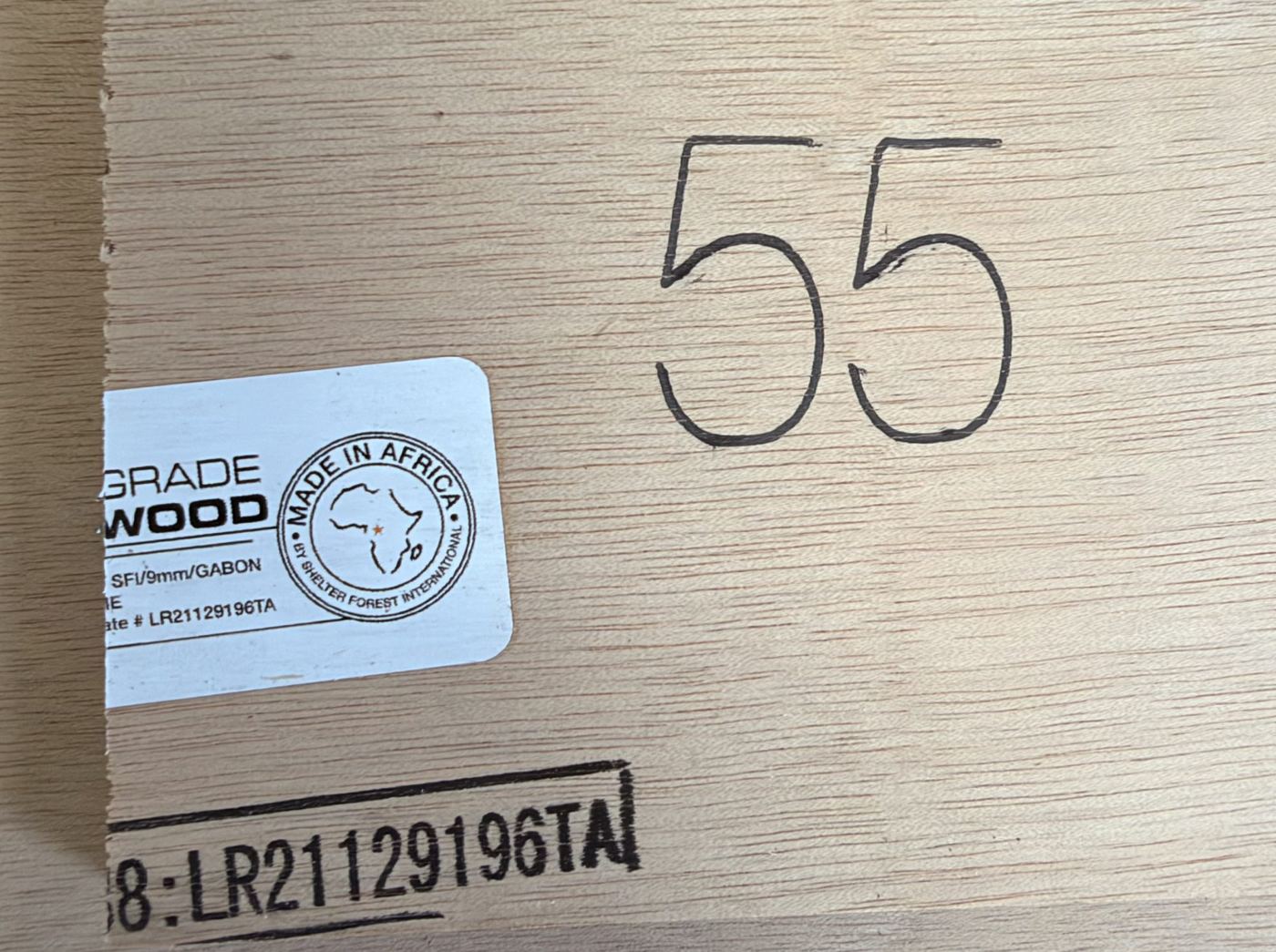
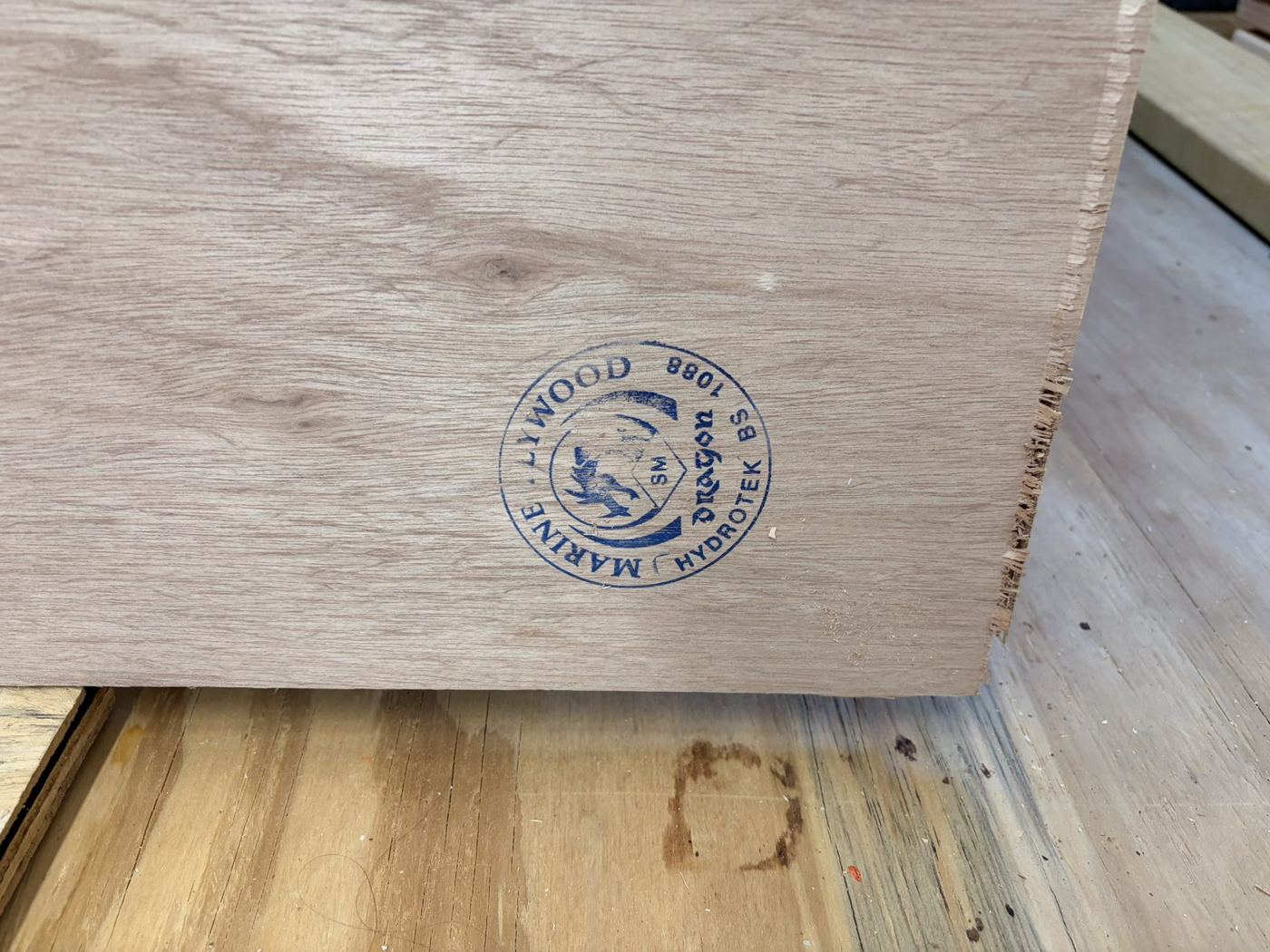
- The plywood carries its BS 1088 marks: a printed label and edge stamp on the Okoume sheets, complete with a Lloyd's Register certificate number, and a BS 1088 stamp on the Meranti. Photograph them. The class certification file wants evidence of materials, and stamps are the cleanest evidence there is.
- B&B Yacht Designs was kind enough to send the physical plan sheets with the kit. If future builders elect the same option: find them early, get them out of the box, and protect them. Paper and epoxy do not coexist.
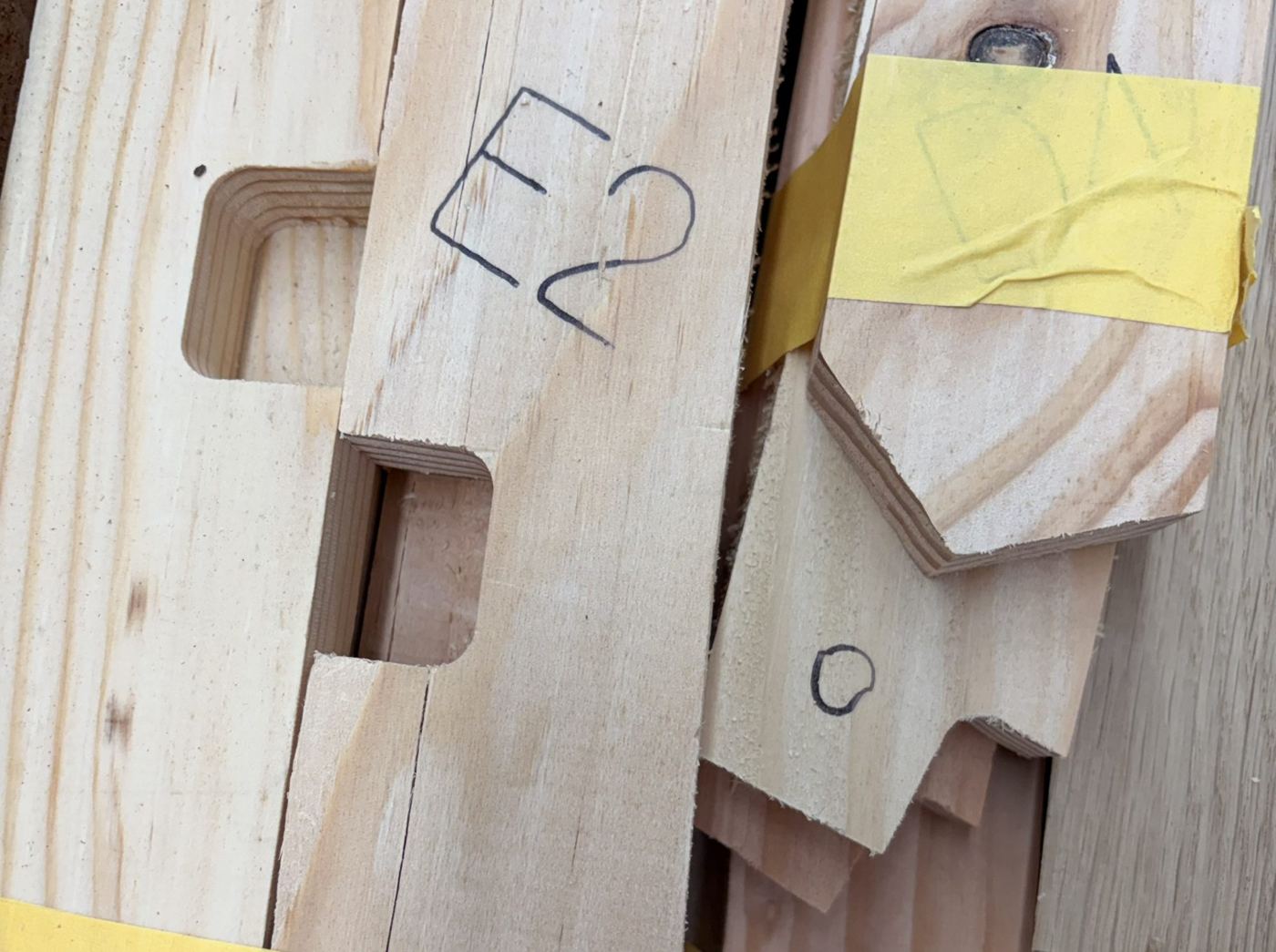
First impressions of the cutting itself: the parts are crisp, the interlocking joints are snug, and every piece is numbered (thankfully). That precision is why you buy a kit: the designer's lofting, cut by machine, so a first-time builder starts from accurate parts instead of hoping to create them.
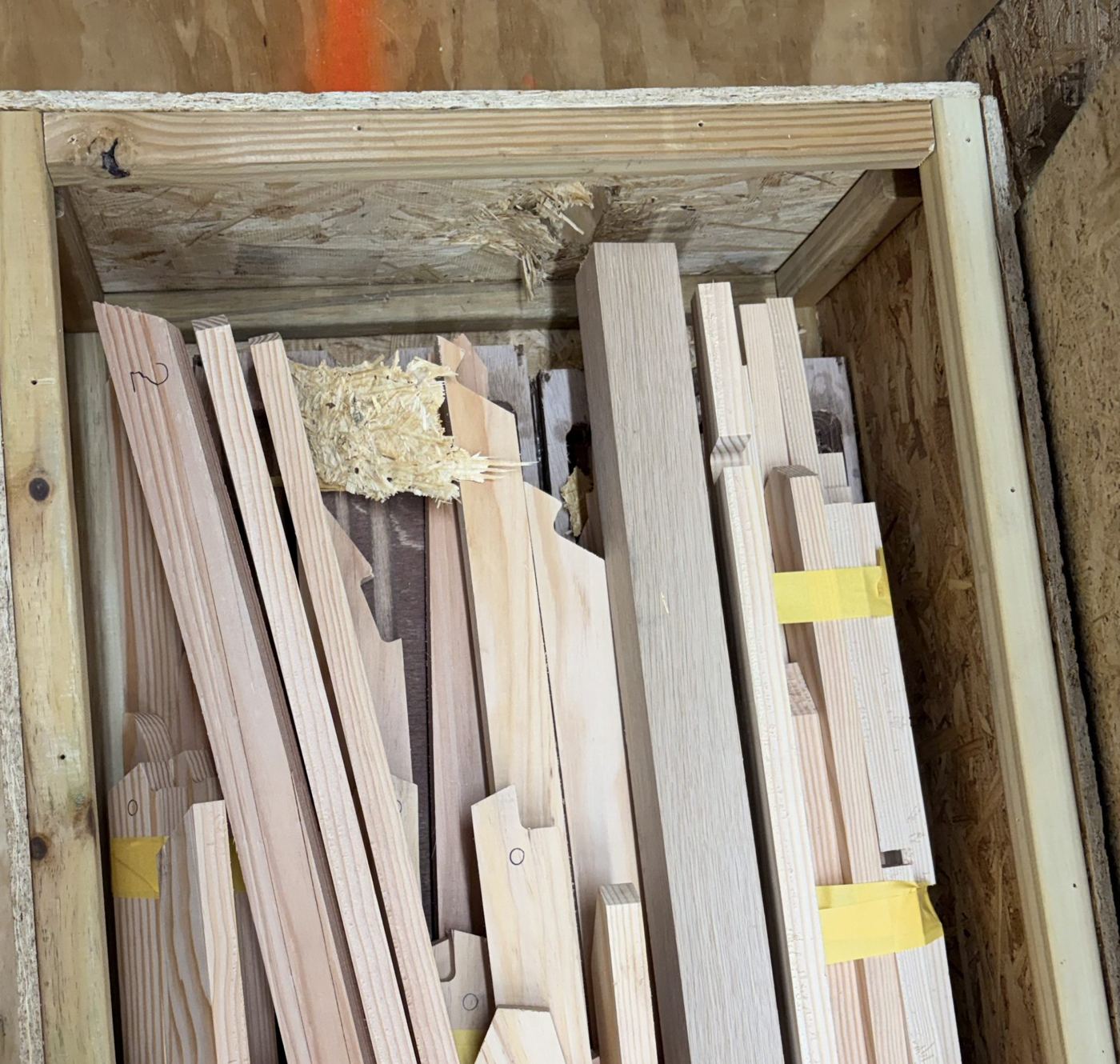
The crate did its job, too. One corner arrived punctured and a wall was splintered, so the journey had clearly been eventful somewhere along the way. But when the lid came off, the parts inside were untouched. It was packed as if someone expected the worst, and that is exactly what you want from a crate carrying a boat. Thanks to Alan, at B&B Yacht Designs.
The build begins
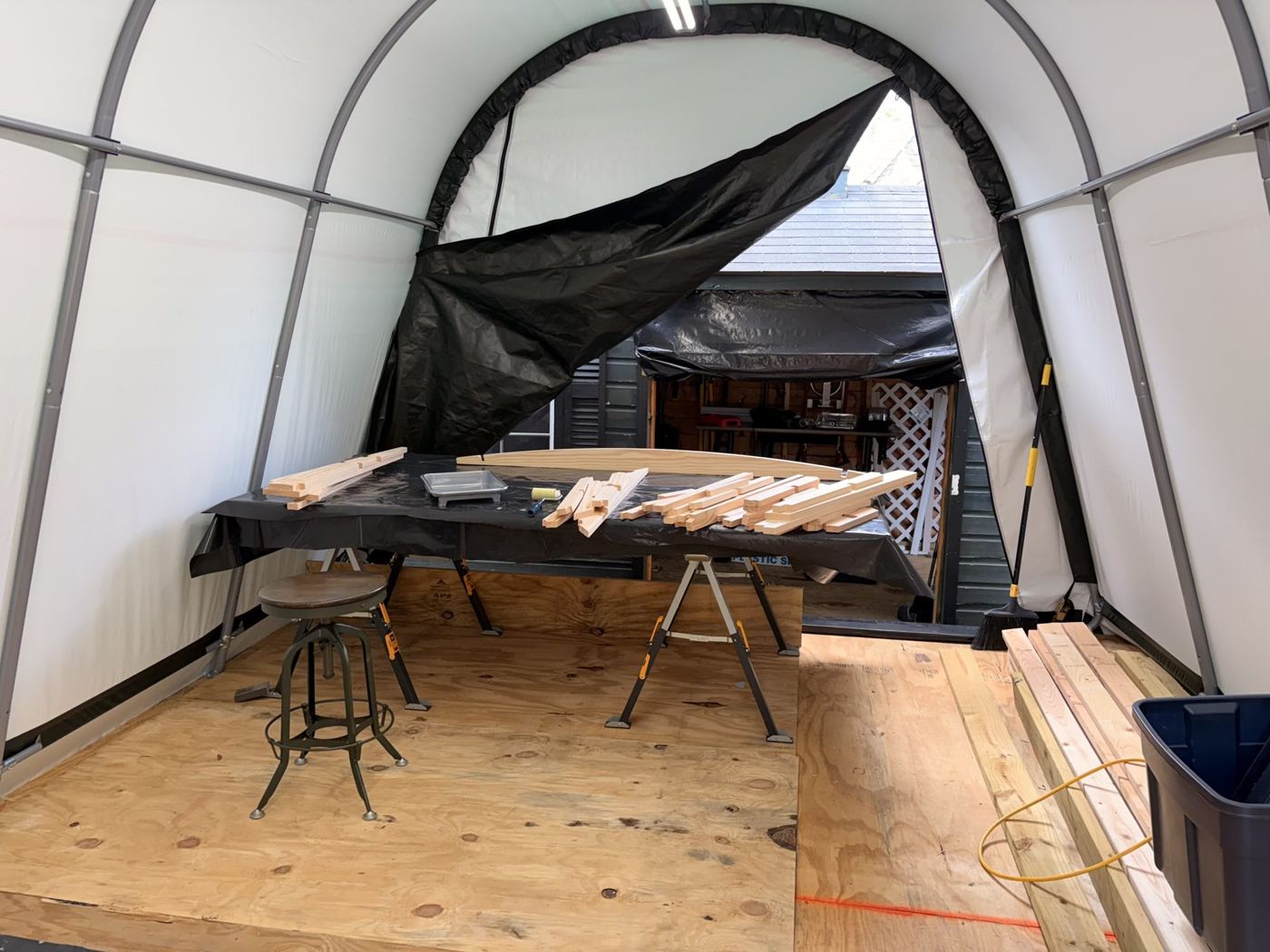
The workspace was ready and waiting: the platform beams under the shelter were set, levelled, and squared weeks ago, because everything that comes after (the jig, the frames, the hull) inherits its accuracy from that datum.
And the first epoxy is on. The opening campaign isn't glamorous: sealing components on the bench before assembly. Every plywood and timber piece gets coated while it's still flat and easy to reach. That's a far better use of weeknight hours than sanding epoxy overhead inside a finished hull next year. I've framed the schedule so that weeknights are for coating; weekends are for assembly. That's the rhythm for the next little stretch.
For the record
One more reason this log exists: the class requires builders to document the construction. If you can't show how the boat was built, you can't certify it. So from here on, every stage gets photographed: before, during, after. This blog is now part of the boat's paperwork.
Next up: frames start coming together, one gusset at a time.