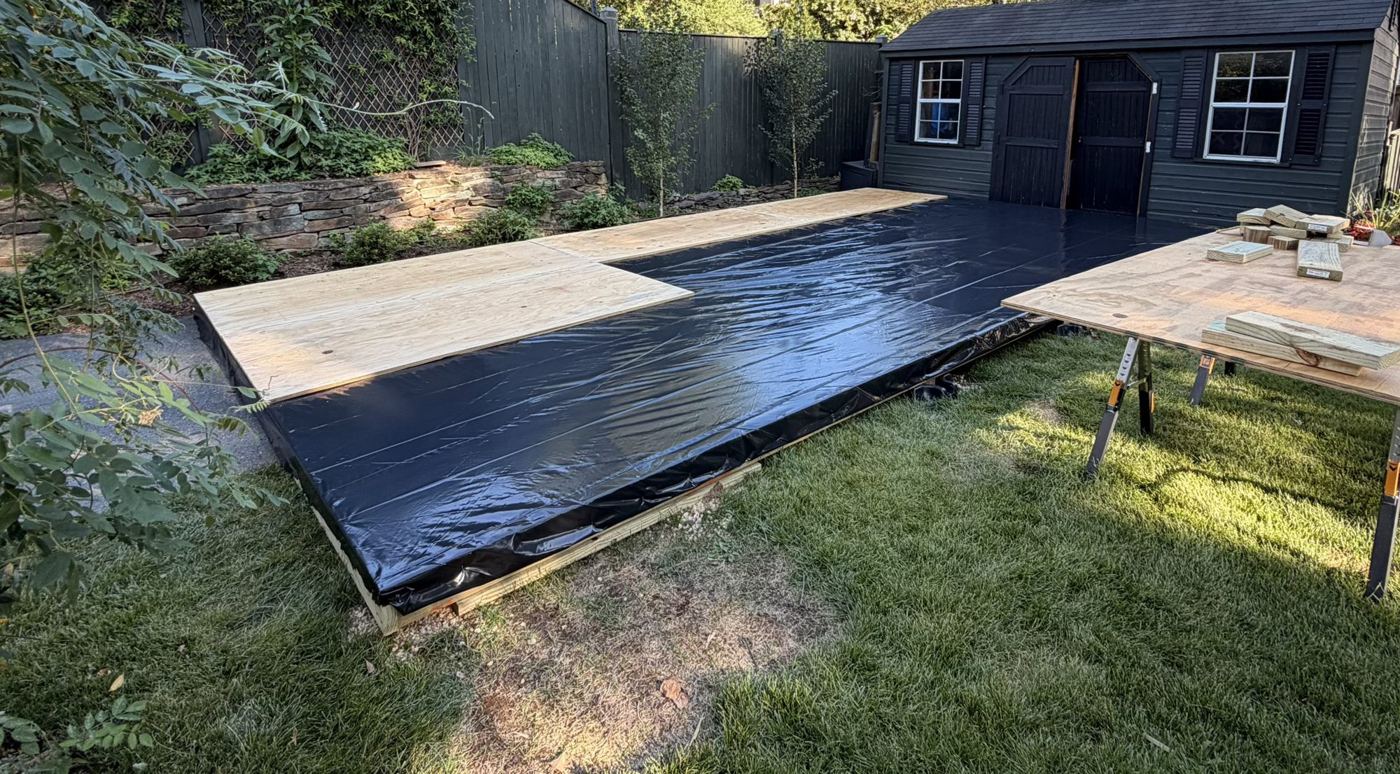
Starting again from the ground up: doubled beams, fifteen support points and a laser level at dusk, until the floor was dead level.
The redesign
The early ideas went through several revisions. A slab was too permanent; simple ground-laid sleepers couldn't span the soft grass or the runoff; stacked framing sat too tall. What finally emerged was a proper raised deck: three doubled 2×6 (38 × 140 mm) beams running the full 7.3-metre length, their end-joints staggered so no seam ever lined up and carried on fifteen support points that stepped up the slope: shims where the ground was high, 4×4 posts and pedestals through the middle, and solid deck blocks stacked nearly 30 centimetres at the low back corner. Each block on the grass side sat on excavated, compacted ground rather than bare sod.
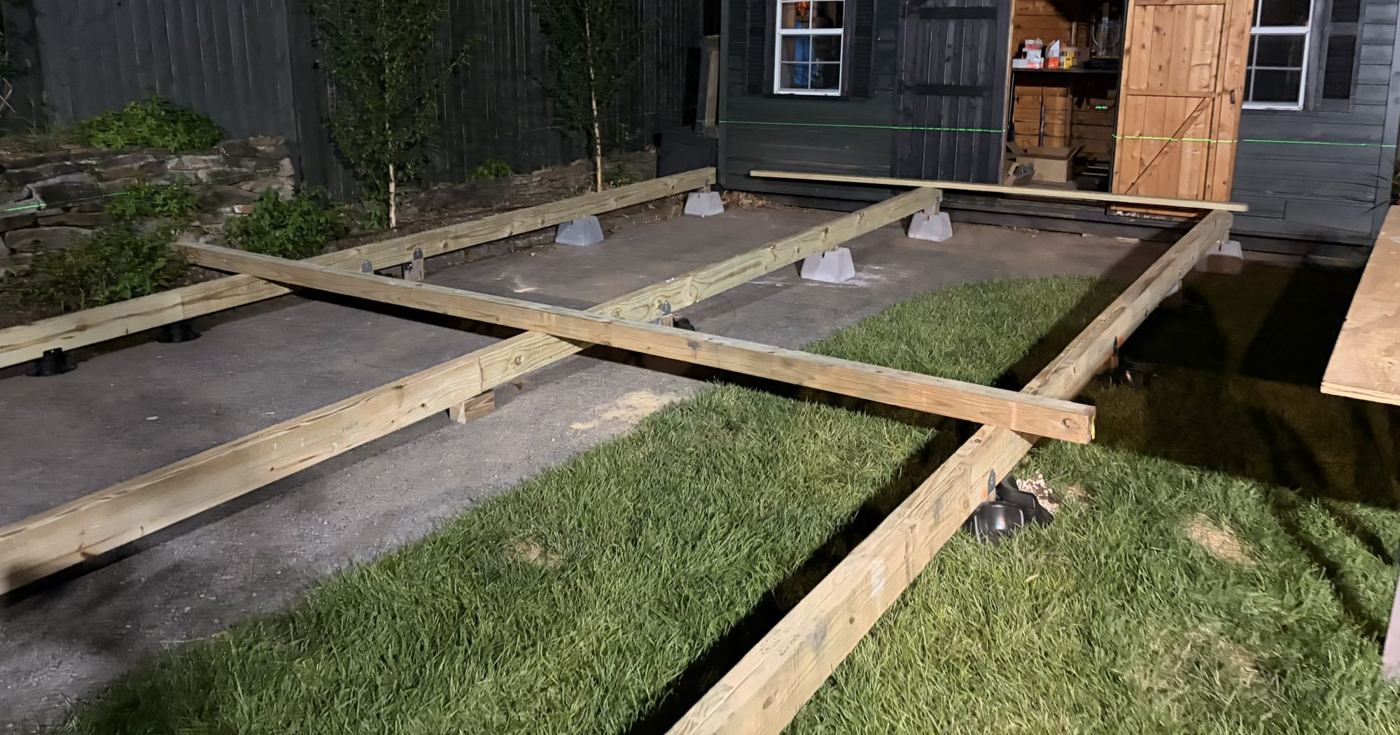
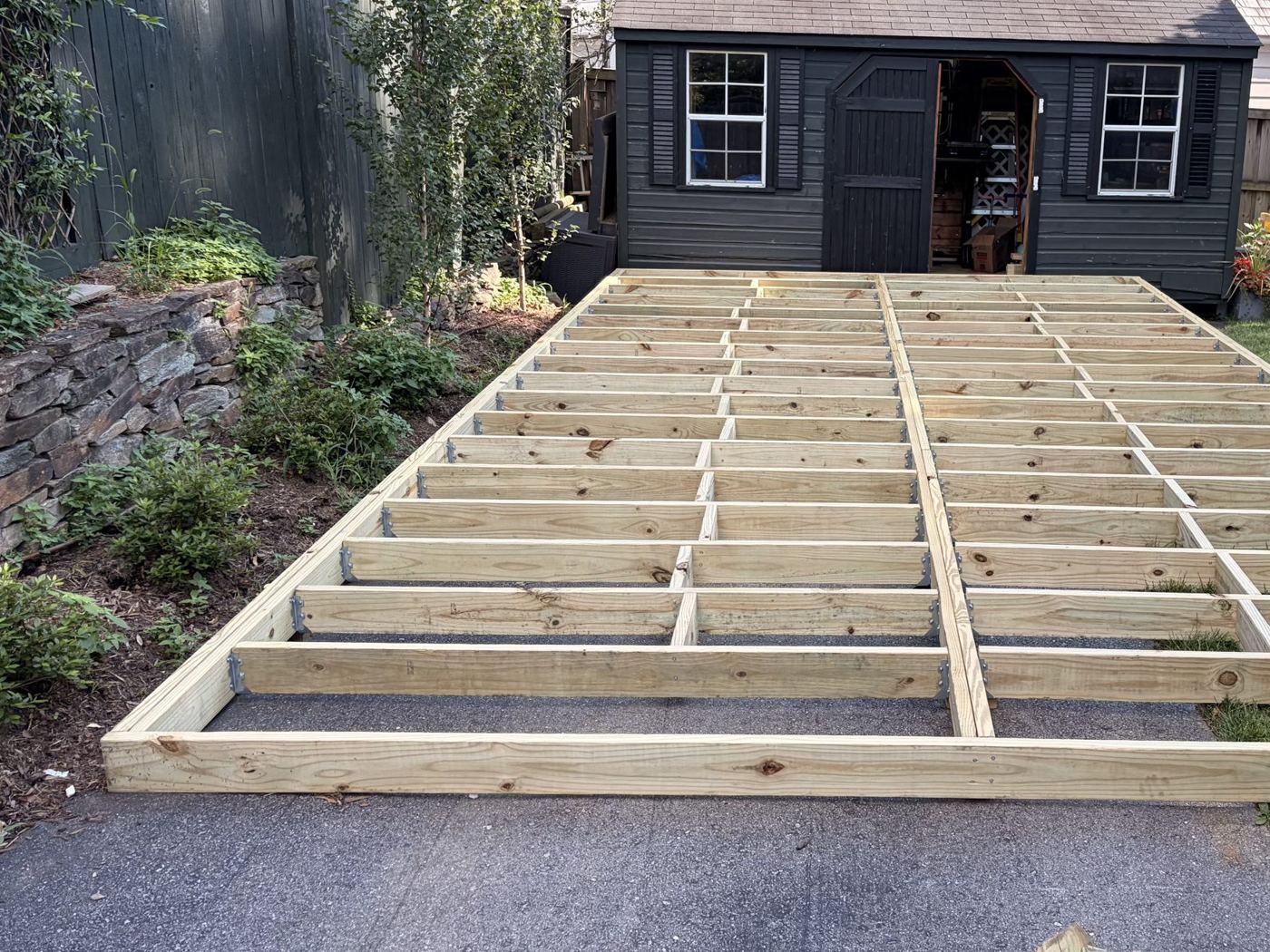
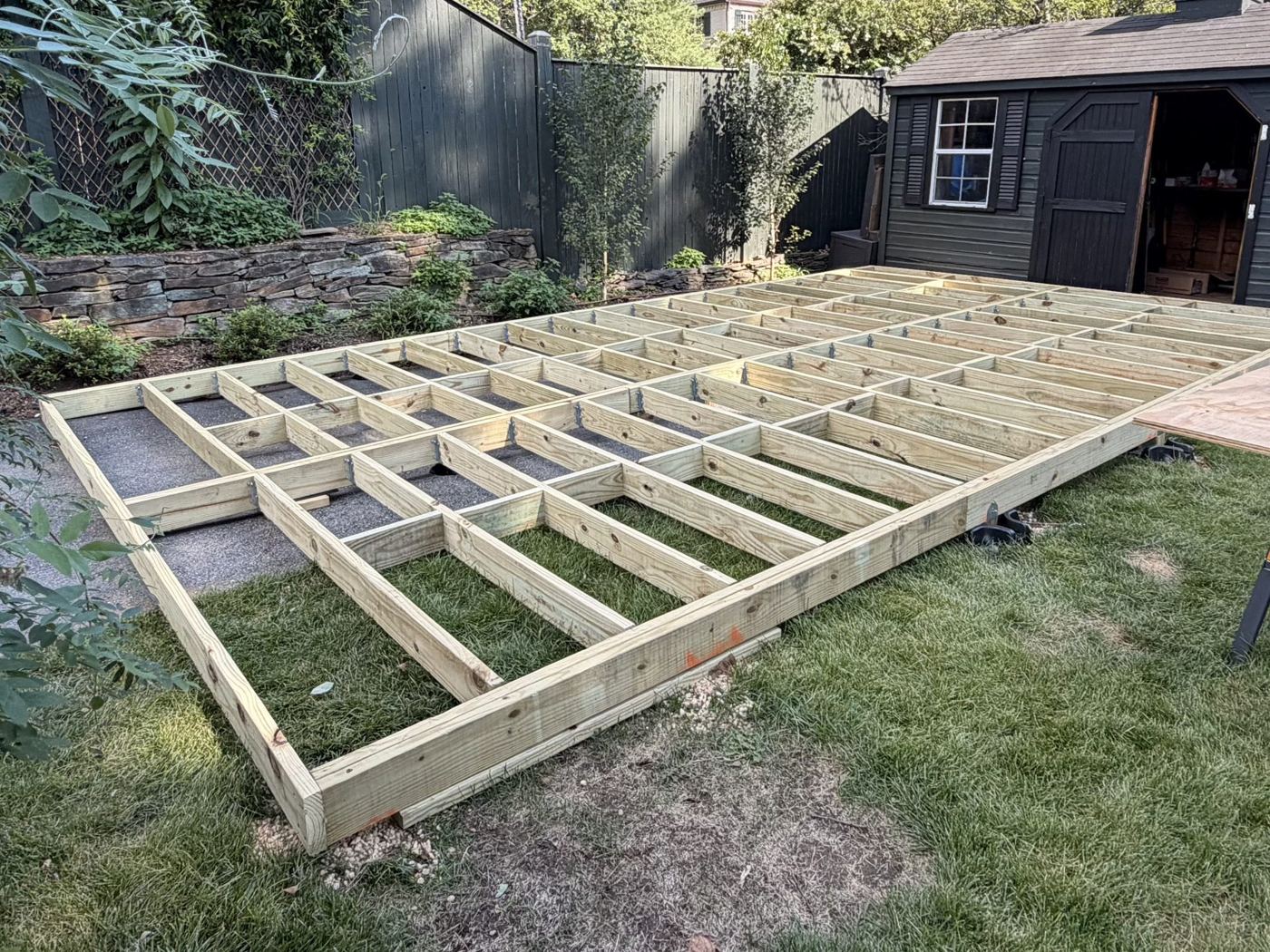
The beams were levelled not to the treacherous ground but to a single laser plane, with every beam-top driven to one reference number until all fifteen points agreed. Then the frame was racked square until its diagonals matched, to within about 12 mm. Joists were hung flush between the beams in galvanised hangers, a 0.15 mm polyethylene barrier was laid on the earth below to shed rising damp and driveway runoff, and plywood was decked over the top. The messy, sloping ground was left to do whatever it did underneath; the levelling all happened in the framing above it, where it belonged. The result was a floor that ignored the slope entirely: dead level where it mattered, raised and open beneath so water ran through and away, and strong enough to hold the boat that would be built upon it.
One logistical wrinkle: the green laser was invisible in daylight, so most of the measuring and levelling happened at dusk, to my neighbour's chagrin. The heavy building all happened in the heat of the weekend days. Trial and error is twice the trial at 40 °C.
The trial and error also taught me something every builder seems to learn in person: you don't set a platform level in one go. You get there slowly, checking, shimming and re-checking until the bubble stops moving and the numbers agree from every direction.
Done means checked twice
By the end, the beams were set, levelled and squared, checked corner to corner and across the diagonals, then checked again a day later, after everything had settled and been rained on. Only then did I allow myself a sigh of relief, and the purchase of the shelter that would go on top.